Agile Rituals are often misunderstood. Many people confuse adopting Agile methodology with having no rules or structure, but nothing could be further from the truth. The effectiveness of frameworks such as Scrum relies on a precise rhythm, marked by recurring events that turn chaos into organized productivity.
These events are not simply meetings. They are genuine Agile Rituals designed to synchronize the team and ensure continuous inspection and adaptation.
In this article, we will explore the two events that define the beginning and the daily rhythm of the work: the Daily Stand-up and Sprint Planning. We will see how to master them so they do not become a waste of time, but instead become strategic tools for project success.
1. Agile Planning Rituals: Sprint Planning
Among all Agile Rituals, Sprint Planning is the event that sets the course. It is the moment when the team moves from an abstract strategic vision to concrete tactical action.
Without proper planning, a Sprint can quickly become a frantic race without a clear destination, with the team working hard without generating the maximum possible value.
What happens during this ritual?
The entire Scrum Team comes together to answer two fundamental questions that will determine the success of the following weeks:
- What can we deliver during this Sprint?
This means selecting the appropriate items from the Product Backlog. - How will we complete the work?
This involves breaking the selected work down into actionable tasks.
The Product Owner’s role and team autonomy
The Product Owner arrives with a clear objective, the Sprint Goal, and a Product Backlog ordered by priority.
However, one of the fundamental principles of Agile Rituals is empowerment: the development team decides how much work it can realistically take on.
This is essential for team accountability. Tasks should not simply be assigned from the top down. Instead, the team pulls work according to its historical capacity, or velocity, and the perceived complexity of the tasks.
If management forces additional tickets into the Sprint, the ritual loses its value as a shared commitment and becomes little more than an imposed deadline.
Best practices for effective Sprint Planning
- Use a strict timebox. A one-month Sprint can have a maximum planning time of around eight hours. For the more common two-week Sprint, around four hours is usually sufficient. Time limits help the team focus on what really matters.
- Apply a Definition of Ready (DoR). User stories should be clear, estimated and testable before they enter the Sprint. If a story is still vague, it should be discussed during refinement rather than during Sprint Planning.
- Manage capacity realistically. Do not plan for 100% of theoretical team capacity. Leave a buffer, for example 10–20%, for unexpected issues, urgent bugs or absences. A team that repeatedly misses its Sprint goals can quickly lose motivation.
2. The Daily Stand-up: The Most Frequent Agile Ritual
The Daily Stand-up, also called the Daily Scrum, is probably the best-known Agile ritual. Paradoxically, it is also one of the events that most often turns into a repetitive and unproductive routine.
What it is not: it is not a status report for a manager and it is not the right moment to solve complex technical problems that require detailed analysis.
What it is: a short, 15-minute moment of micro-planning and alignment for the development team. Its purpose is to realign the team toward the Sprint Goal every 24 hours.
The three classic questions
Traditionally, each team member answers three questions to ensure transparency:
- What did I do yesterday to help the team reach the Sprint Goal?
- What will I do today to help the team reach the Sprint Goal?
- Are there any obstacles or impediments blocking me or the team?
Today, many mature teams prefer a “walk the board” approach, reviewing tickets from right to left, from completed work back toward what remains to be done.
This shifts the focus from individual activity to workflow, helping the team identify blocked work and improve overall flow.
Why is it called a “stand-up”?
The meeting is traditionally held while standing because the mild physical discomfort reinforces the idea that the session should be short, concise and energetic.
If the meeting consistently lasts longer than 15 minutes, it usually means that the team is either discussing topics that should be handled elsewhere or that the meeting itself is not being managed effectively.
Common mistakes and remote-team challenges
- Talking to the Project Manager. Team members should speak to one another, not report to the manager or Scrum Master. The Daily is a peer-to-peer planning moment.
- The “sixteenth minute”. If a technical issue emerges, do not solve it during the Daily. Park the topic and discuss it immediately after the meeting, involving only the people who are actually needed.
- Chronic lateness. Agile Rituals require discipline. The Daily should begin at the agreed time, whether everyone is present or not.
- Distributed teams. For remote teams, the Daily is even more important because it helps reduce isolation. Using webcams and sharing the digital board helps keep attention focused on the work itself.
Rhythm Creates Value
When Sprint Planning and the Daily Stand-up are implemented correctly, they transform a group of individuals working in isolation into a cohesive and responsive team.
Sprint Planning provides strategic direction, while the Daily Stand-up allows the team to adjust course every day, preventing small delays from turning into major problems by the end of the project.
Agile Rituals are not set in stone. Review them regularly and adapt them to the specific needs of your team in order to maximize their effectiveness.
In the next article, we will complete the cycle by looking at the rituals that close the feedback loop: the Sprint Review and Sprint Retrospective.
Ready to bring order to the chaos?
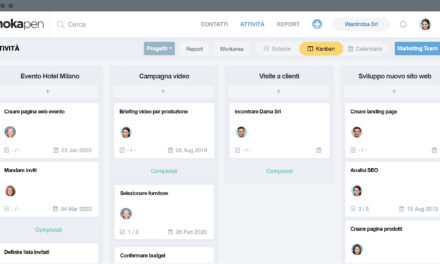
Don’t let your projects manage you. Take control today. Mokapen is the intuitive, fast and powerful tool to plan, track and deliver your projects on time.